.png)
.png)

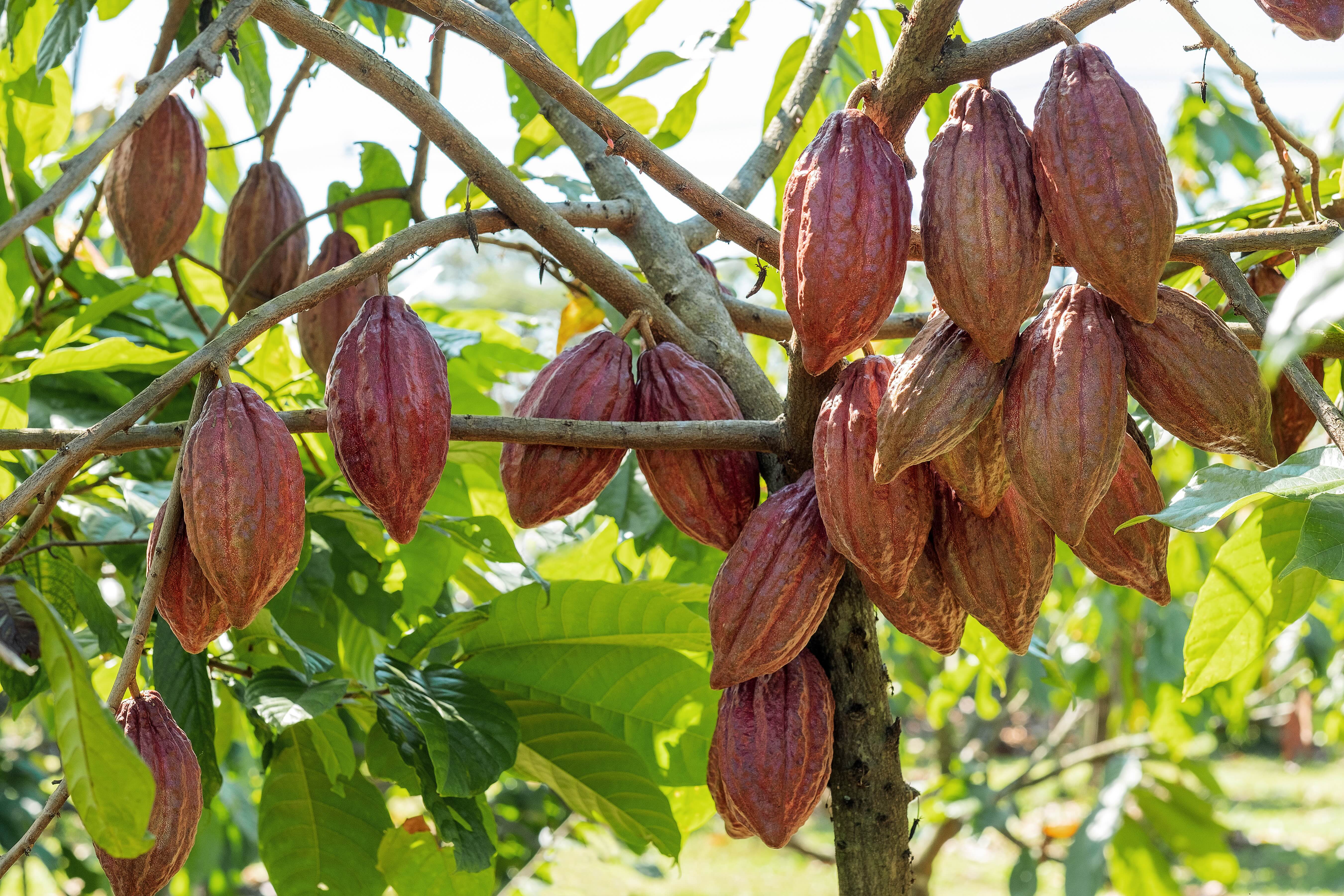
Two governments controlling more than 60 percent of world cocoa production yesterday agreed to coordinate farm gate prices and harmonise crop calendars from 2026/27. The market barely reacted. It should have.
Presidents Alassane Ouattara of Côte d'Ivoire and John Mahama of Ghana signed a joint declaration on 16 June agreeing to align their 2026/27 seasons and to coordinate their guaranteed farm gate prices.
Two distinct mechanisms are involved:
Coordinated pricing. The guaranteed prices paid to farmers in each country will be set in coordination rather than independently.
Harmonised crop calendars. Season structures will be synchronised from 2026/27, meaning the main crop and mid crop windows, and the forward selling programmes attached to them, will run in step.
The stated rationale is direct: the two countries together grow around 60 percent of the world's cocoa, and acting jointly gives them more weight.
The practical driver is smuggling, and it is a larger issue than the market generally acknowledges.
Historically, whichever of the two offered the better farm gate price in a given season pulled beans across the border from the other. This distorted arrivals data at both origins, undermined the national forward selling programmes both regulators operate, and transferred value away from whichever government was attempting to support its own farmers. Official production figures have been unreliable at precisely the moments when the market most needed them to be sound.
If the farm gate price is identical on both sides of the border, the arbitrage disappears and both regulators regain control of their own supply data. For anyone who trades on Ivorian arrivals figures, that alone is a meaningful improvement.
The structural significance is different in kind, and it is what the market has not yet absorbed.
Coordinated price setting between two producers controlling more than 60 percent of world supply has no recent precedent in soft commodities. Calling it a cartel is premature. But the direction is unmistakable, and both governments have moved this way before. The Living Income Differential, the fixed premium the two applied jointly to their cocoa sales, established the principle that they could act together on price. Yesterday's declaration extends that principle from a premium on the export price to the domestic pricing structure itself.
If it holds, it affects differentials on West African physical contracts, the timing and predictability of forward selling programmes, the basis risk profile of origin contracts, and over time the floor under the world price.
There is a tension at the centre of this arrangement that clients should understand, because it is a medium term supply risk rather than a technical detail.
World cocoa prices have recovered sharply since the March low, gaining substantially over the past several weeks. Farm gate prices in both countries were cut earlier this year, Côte d'Ivoire in March, and have not followed the futures market up. The price being coordinated is well below what the international market now implies.
This matters because the West African supply problem is fundamentally an investment problem. Tree stock is ageing, replanting rates are inadequate, and disease pressure is rising. Fertilizer costs have risen sharply since the Gulf disruption began removing Middle Eastern supply from the market. None of that gets addressed by farmers who never see the price signal.
A mechanism that stabilises farmer income is genuinely valuable. One that stabilises it below the level required to fund replanting defers the supply crisis rather than resolving it.
The agreement takes effect in a season that already looks difficult.
Early surveys of the 2026/27 West African crop have indicated below average cherelle formation on cocoa trees, signalling a weak outlook for the main harvest beginning in October. That reading drove the rally to multi month highs in early May. StoneX has cut its 2026/27 global surplus estimate to 149,000 tonnes from a January forecast of 267,000, citing risk to the West African crop from an expected El Niño, and trimmed 2025/26 to 247,000 tonnes from 287,000. A 149,000 tonne cushion on a market of roughly 5 million tonnes is a rounding error.
The weather risk has now been formalised. NOAA's National Weather Service issued an El Niño Advisory on 11 June, confirming development in the tropical Pacific, and forecasters assign a 63 percent probability of a very strong event, meaning anomalies above 2.0 degrees Celsius, at the winter peak. The World Meteorological Organization's 2 June alert put the probability of El Niño conditions at 80 percent for June to August, rising toward 90 percent through September to December.
Every strong El Niño over the past 55 years has reduced global cocoa production.
A coordinated pricing mechanism is easiest to sustain in a stable season. Its first real test will come in one where at least one of the two governments may face acute domestic pressure to break ranks.
One further point of timing deserves attention. The EU Deforestation Regulation applies from 30 December 2026, which falls inside the first harmonised main crop. From that date, West African cocoa entering the EU must carry plot level geolocation evidence of deforestation free production since 31 December 2020.
Stronger national regulators with harmonised calendars could in principle support traceability. Equally, any consolidation of pricing power at origin changes who bears the cost of compliance. The two developments are hitting the same supply chain in the same season, and clients should be planning for both together rather than separately.
For physical buyers: the 2026/27 farm gate announcements from both countries will now be a single coordinated signal rather than two independent ones. The level chosen will tell you a great deal about both governments' private assessment of their own crops. Watch for it ahead of the October main crop.
For origination and structured trade: review basis risk assumptions on West African physical contracts before the new season structure takes effect.
For anyone with EU facing cocoa exposure: build the EUDR compliance timeline against the crop calendar, not the calendar year. December 2026 is inside the harvest.
PAM Trade advises clients on commodity structuring, origination and trade compliance across UAE, Hong Kong and European jurisdictions.
.jpg)
.png)